Tensions Explode In Middle East As New Clashes Disrupt US Iran Military Developments
The Persian Gulf is once again on the brink of an all out war. Only a month after a fragile peace deal brought temporary relief to global energy corridors, the agreement has collapsed into a series of heavy military strikes. With Donald Trump declaring the brief truce finished and US warplanes hitting targets along the Iranian coast, the sudden spiral of violence marks a highly volatile turn in US Iran military developments. The latest updates from the ground indicate that both nations are locked in a dangerous cycle of retaliation, raising fears of a protracted conflict that could drag in regional powers and permanently disrupt global maritime commerce.
To really wrap our heads around how quickly this peace deal collapsed, we have to look back at how volatile things were at the very start of the year.To understand how the region arrived at this critical juncture, one must look at the highly volatile events of early 2026. The year began with a massive American military buildup in the Middle East, culminating on February 28 in a series of highly destructive joint US-Israeli airstrikes. Those initial attacks targeted more than 900 locations, resulting in the death of Iran’s Supreme Leader Ali Khamenei and triggering a massive expansion of hostilities. In March, Iran retaliated by launching ballistic missiles and drones at American military facilities scattered across Bahrain, Saudi Arabia, Kuwait, and Qatar, while simultaneously declaring the closure of the strategic Strait of Hormuz.
In an effort to avoid total ruin, negotiators managed to secure an interim Memorandum of Understanding (MoU) on June 17. The 60-day pact temporarily reopened the Strait and provided a waiver on Iranian crude oil sales. However, this fragile calm proved incredibly short-lived. Between July 7 and July 9, multiple Iranian attacks on commercial tankers in the shipping lanes forced the US military to react. US Central Command (CENTCOM) carried out two waves of strikes against more than 170 Iranian targets. On July 8, President Trump declared the interim agreement void and immediately canceled the oil export waivers, prompting a new round of Iranian missile salvos targeting American bases on July 9 and 10.
A Persian Gulf Tactical Analysis Of The Naval And Aerial Standoffs
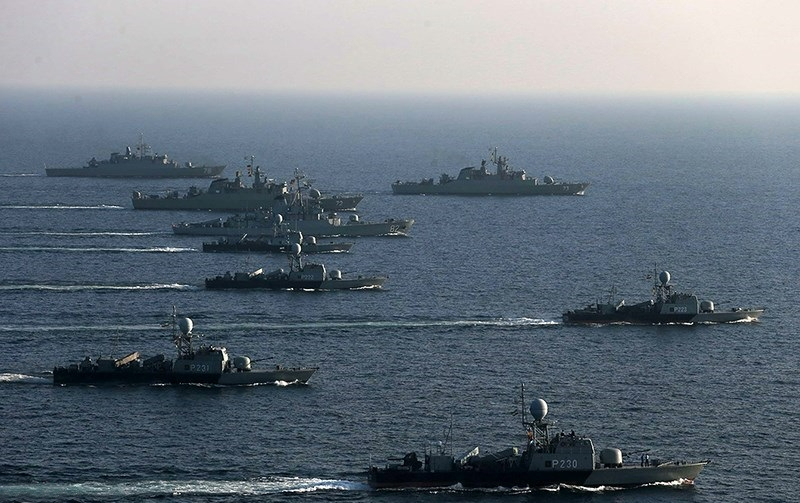
That brings us to the actual military matchup on the water, which looks a lot different than previous standoffs in the region.On the water and in the air, the military balance remains incredibly tense. A closer Persian Gulf tactical analysis shows that while Iran’s conventional naval capabilities were severely degraded during the initial phases of the war, the regime has quickly shifted its focus. Instead of trying to rebuild a traditional blue water navy, Tehran has prioritized reconstituting its drone and ballistic missile arsenals, which now stand at roughly half of their pre war levels.
Currently, Iranian forces are attempting to enforce their own rules over the Strait of Hormuz. They are utilizing fast attack craft, coastal radar installations, naval mines, and suicide drones to harass shipping. In response, CENTCOM has focused its operations on systematically destroying these anti ship missile batteries, command networks, and Revolutionary Guard staging areas. US military officials have repeatedly stressed that continued interference with global shipping is entirely unacceptable. This has triggered intense social media reactions worldwide, with users sharing geolocated footage of smoke rising over Iranian port facilities and expressing deep concern over a wider confrontation.
How The Breakdown Of The Truce Impacts International Oil Corridor Stability
Of course, these military chess games aren’t happening in a vacuum, and the economic fallout hit global energy markets almost immediately.The immediate real world consequences of these clashes are being felt in global markets. The threat to international oil corridor stability has sent shockwaves through the energy sector. Following the sudden cancellation of the Iranian oil export waiver and the resumption of intense fighting, global crude prices jumped instantly.
The Strait of Hormuz is the world’s most critical maritime choke point, and its militarization places immense strain on global supply chains. Commercial shipping companies face skyrocketing insurance premiums and direct physical threats to their crews and vessels. This has forced major maritime shipping routes to experience a dramatic plunge in daily transit volumes. While some liquefied gas tankers and state linked vessels continue to run the gauntlet under close monitoring, the broader economic impacts are trending globally as businesses brace for prolonged energy shortages and increased operational costs.
The Diplomatic Stalemate And Recent Middle East Security Briefings
But beyond the raw economic data and shipping delays, there is a much more direct, physical threat hanging over Iran’s immediate neighbors.The fallout of this military escalation extends far beyond Washington and Tehran. According to the latest Middle East security briefings, neighboring Gulf Cooperation Council (GCC) states find themselves directly in the line of fire. Countries like Kuwait, Bahrain, and the United Arab Emirates have experienced multiple drone and missile strikes. Iran has used these attacks to pressure its neighbors, demanding the complete withdrawal of US military and diplomatic assets from the region.
With military pressure mounting on all sides, you’d usually expect to see some quiet back-channel diplomacy starting up, but right now, those avenues are completely frozen.On the diplomatic front, the situation is at a complete standstill. Following the destruction of the interim June deal, there are currently no pathways to direct talks. Iranian officials have outright rejected any direct negotiations with the Trump administration. Instead, Tehran has chosen to submit formal protests to the United Nations, targeting US and Israeli leadership. With both sides dug in, the international community is left watching a highly dangerous game of brinkmanship where a single miscalculation could ignite an even larger war.
Discover more from jiveglow
Subscribe to get the latest posts sent to your email.
